Three weeks after listing on WebProjectList, a founder noticed their product had climbed into the top 20 on the leaderboard. They screenshot it and added it to their "social proof" folder, not sure yet whether to use it. That hesitation is the right instinct. A leaderboard position can mean several things, and conflating them leads to either ignoring a useful signal or overselling a metric that visitors will not bother to verify.
This guide looks at what directory leaderboards actually track, when the ranking is genuinely useful for your marketing, and when it is noise. It does not cover how to build a weekly link-building routine or set a submission calendar. Those are separate workflows. This is about understanding the data the leaderboard already shows - and deciding what to do with it.
What a directory leaderboard is actually measuring
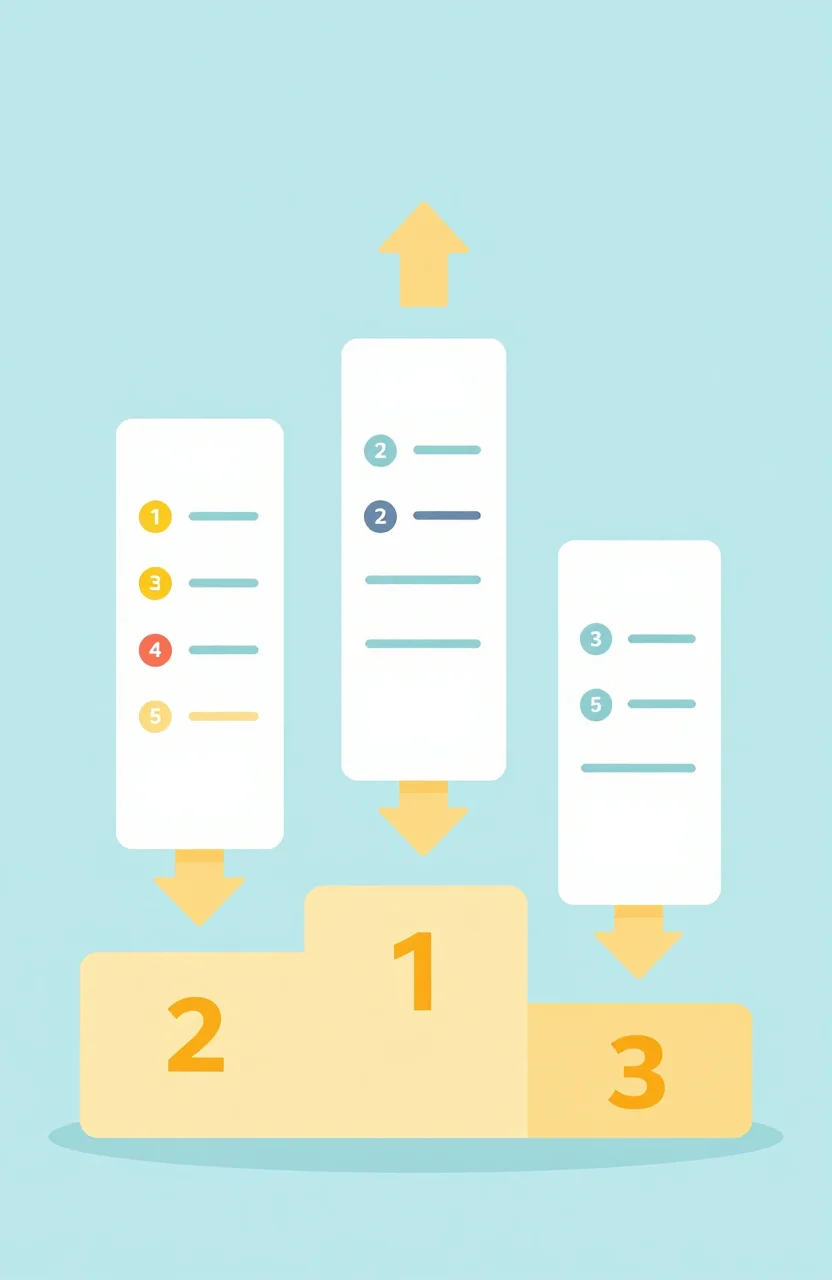
Every directory leaderboard is different, but most aggregate a mix of these signals: listing views or clicks from within the directory, external link equity on the listed domain, saves or bookmarks from directory users, and activity signals like last-updated timestamps or listing completeness.
None of these are the same as product quality. A well-resourced product can rank high by driving traffic to the listing. A quiet bootstrapped tool can sit low despite being excellent. The leaderboard measures engagement with the listing and some proxy for domain authority - not the value your product delivers to real users.
That distinction matters when you decide how to present the ranking. It is a measure of your current directory presence and domain signals. Presenting it as "ranked top 10 on WebProjectList" is accurate and worth using in context. Presenting it as "independently validated by the community" is a stretch unless the directory explicitly says reviews or community votes drive the rank. Know which one your leaderboard is.
Browse the leaderboard for a few minutes and look at what the top-ranked projects have in common. Recent updates, strong external link signals, complete listings, active categories. That pattern tells you what the algorithm rewards here specifically, and which levers are actually in your control.
When leaderboard position genuinely helps
Social proof on landing pages and pitch materials
A top-50 position in a relevant category gives you a specific, verifiable claim. "Listed in the top 50 SaaS tools on WebProjectList" with a link to the listing is more credible than vague "trusted by thousands" copy, because a curious visitor can click through and confirm the claim themselves. That verifiability makes it more believable, not less.
Use it in the social proof row below your hero section, in onboarding emails after signup, or in the footer of a pitch deck slide. Keep the claim honest - top 50 if you are top 50, top 20 if you are top 20. Specificity beats superlatives every time.
Investor and partnership conversations
A leaderboard screenshot is lightweight evidence of traction, but it counts. It shows an active web presence, a domain strong enough to place competitively, and the initiative to build out a listing in the first place. In early-stage conversations where the ask is "show me any external validation," it fills a slot that would otherwise be empty.
Maintenance motivation
Leaderboard visibility gives you a concrete reason to update your listing more often than "whenever I remember." A drop in rank after six months of no updates is a clear signal. You know the cause. You refresh the description, add a new screenshot, maybe activate a coupon, and watch the position recover. That cycle is useful maintenance most founders skip entirely without a visible indicator pushing them back.
When leaderboard rank is noise
If your position is not in a category that maps to what your actual buyers are browsing, the rank has limited conversion value. Ranking high in a broad "productivity" category means less than ranking visibly in a narrower "project tracking" or "SaaS tools" filter if that is your buyer persona. Context defines relevance.
Leaderboard rank also does not tell you whether clicks from your listing are converting to signups. That requires UTM tagging and analytics. A rank of 8 with zero conversions from directory traffic is still rank 8. Treat the leaderboard as a visibility indicator, not a conversion guarantee.
If you are an early-stage product with a new domain, the leaderboard will likely show a low position because domain authority is low - regardless of how good your listing copy is. In that case, focus first on adding more quality listings, building links across multiple directories, and getting the domain past its crawl threshold before treating the rank as meaningful. The directory shows the full range of categories where you can build out additional placements to strengthen that base.
Improving your position without inflating it artificially
Keep your listing accurate and current. Category correct. Description reflecting what the product does today, not six months ago. Screenshot showing the current interface. A maintained listing competes above its domain weight.
Build external links to your domain through legitimate directories and partner pages. Since leaderboard algorithms often incorporate domain authority signals, a stronger overall link profile helps indirectly. This is not gaming the system - it is doing the work the algorithm rewards for good reason.
One thing to avoid: manufacturing clicks from non-buyers to boost view counts. If the leaderboard weights listing clicks, inflating them with coordinated click exchanges gives you a rank that collapses the moment real-user engagement is measured. It also risks your listing if the platform audits unusual activity spikes. The goal is a rank that reflects real presence, not one that requires constant artificial maintenance.
Use the My Websites dashboard to manage your listings and spot where updates are overdue. A stale listing rarely competes with a recently maintained one, even when the domain behind it is technically stronger.
A simple rule for when to mention your rank
Mention it when the claim is specific and a potential customer or partner can verify it in under 30 seconds. Skip it when the category is not one your buyers recognize, when the rank is low enough to raise questions rather than answer them, or when you are in an audience context where "directory leaderboard" sounds obscure.
Revisit the leaderboard every four to six weeks as a maintenance checkpoint. Not as a daily metric to optimize. The rank is a downstream result of the work - complete listing, current copy, strong domain signals. Fix the inputs and the rank follows. Chase the rank directly and you end up optimizing a proxy instead of the underlying substance.