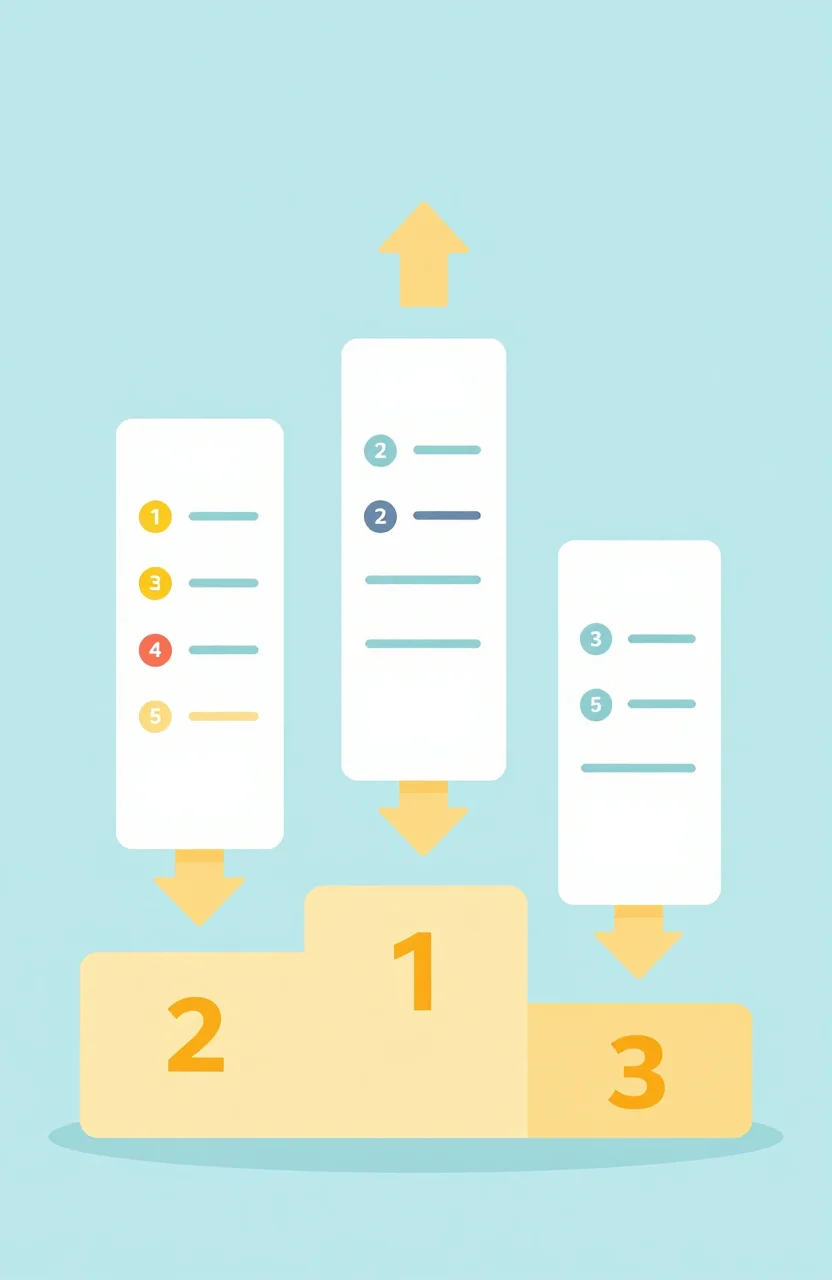

You open a directory opportunity and see Domain Rating 62. That looks strong. Then you check the actual listing URL and its URL Rating is 4. The domain is famous. The page you would land on is not.
That mismatch is why URL Rating vs Domain Rating matters when you vet directory links. DR describes the whole site. UR describes the specific page. Before you submit or celebrate a backlink, you need both - plus a quick check of the link attributes. This guide gives you a 60-second checklist built for listing decisions, not a lecture on metric history.
URL Rating vs Domain Rating in plain English
Domain Rating estimates the strength of a domain's backlink profile as a whole. A high DR site has earned links across many pages over time. That does not mean every URL on that domain is equally strong.
URL Rating estimates the strength of one page's backlink profile. A homepage can sit high while a deep category archive sits near the floor. Directory listing pages often live in that weaker layer: useful for discovery, sometimes thin on inbound links of their own.
For definitions and how DR is commonly read in SEO workflows, start with what Domain Rating is. If your confusion is DR versus Moz Domain Authority, that is a different comparison. Use our guide on DR vs DA for directory links. Here the decision is page-level UR against site-level DR when you evaluate a listing URL.
Why directories trick you with a shiny DR
Sales pages and outreach emails love Domain Rating. It is one number, easy to screenshot, easy to inflate in a pitch. "Get a link on a DR 70 directory" sounds like a win. It may be - or it may be a link from a forgotten tag page that has never earned a single referring domain of its own.
Common patterns:
- Homepage and brand pages carry most of the domain's link equity.
- Individual project or company listings inherit little page-level authority.
- Category hubs sit in the middle: better than orphan listings, weaker than the homepage.
- Pagination, filters, and duplicate listing templates can dilute crawl attention.
So when you vet a directory, open the exact URL where your project would appear (or already appears). Score that URL. If the tool shows UR near zero while DR looks premium, treat the opportunity as a discovery listing first, a link-equity play second.
That does not make low-UR listings worthless. A curated directory can send referral traffic, brand searches, and a clean referring domain even when the listing page itself is quiet in Ahrefs. Just price the opportunity honestly: you are buying visibility and a domain mention, not a homepage-level boost.
The 60-second checklist before you submit or keep a listing
Run this when you evaluate any directory link, whether you are about to submit or reviewing an existing placement.
- Confirm the exact URL. Not the homepage. The listing template, category, or profile page you will occupy.
- Note Domain Rating. Useful as a ceiling signal for the domain's overall reputation.
- Note URL Rating (or equivalent page score). This is closer to the page that will host your link.
- Check indexability. Search for the URL or use a URL inspection tool. Noindex or soft-404 pages waste the submission.
- Verify the link attribute. Dofollow, nofollow, sponsored, or UGC changes how you value the placement. Walk through how to verify dofollow, sponsored, or UGC before you log the win.
- Skim relevance and clutter. Would a buyer trust this page? Is your niche a real fit, or are you one of 400 unrelated logos?
Sixty seconds is enough for a go / no-go on most free and mid-tier directories. Paid placements deserve a longer look at traffic estimates, outbound link density, and historical spam patterns - still starting with UR vs DR on the live URL.
How to read common UR and DR combinations
Use these pairings as judgment aids, not rigid rules.
High DR + high UR on the listing URL: Rare and valuable. The page itself attracts links or lives close to strong internal hubs. Worth prioritizing if relevance is solid and the link is crawlable.
High DR + low UR: The classic directory pattern. The brand behind the directory is established; your specific listing page is not a magnet. Submit if the audience fits and the page is indexed. Do not expect the link to behave like an editorial homepage mention.
Mid DR + mid UR on a category hub: Often better than a lonely leaf listing. Category pages that collect topical projects can be stronger discovery surfaces. Prefer these when the directory lets you choose placement thoughtfully.
Low DR + low UR: Only proceed if the directory is new but curated, niche-perfect, or useful for human discovery. Otherwise your time is better spent on content and outreach that earns links you can explain.
Also watch internal linking on the directory. A listing linked from popular category pages can improve over time even if UR starts low. A listing buried with no internal path may never climb.
Decisions: submit, skip, or renegotiate
Translate the checklist into action.
- Submit: Exact URL is indexable, niche fit is clear, DR is respectable or the audience is highly targeted, and you accept the UR reality. Log the date and the link attribute.
- Skip: Page is noindexed, stuffed with unrelated outbound links, or the pitch sells only a DR number with no live listing URL to inspect.
- Renegotiate or upgrade: You are offered a homepage or featured slot versus a deep template. Compare UR on both URLs before you pay more. Sometimes the upgrade is worth it; sometimes it is cosmetic.
After the listing goes live, re-run the attribute check. Directories change templates. A dofollow link can become sponsored after a redesign. Keep a short sheet: directory name, live URL, DR, UR, attribute, date checked. That habit beats debating metrics in the abstract.
Remember the hierarchy: relevance and trust first, page-level metrics second, domain-level metrics third. Domain Rating tells you the neighborhood. URL Rating tells you the house. For directory work, you move into the house - so score the house, then decide.