Getting a backlink from the wrong directory is worse than getting no backlink at all. A link from a spam-heavy site with no editorial standards can dilute your backlink profile and, in the worst case, send a negative signal to search engines. The good news is that identifying spam directories is not complicated - most of them share the same set of obvious red flags that you can spot in under a minute.
This checklist is for founders who are actively building their backlink portfolio and want to move quickly without accepting links they'll later need to disavow. It won't replace deep research for high-stakes partnerships, but it covers the practical cases: free and paid directories you're considering for your project listings.
Why Directory Quality Matters for Your Backlink Profile
Search engines evaluate not just the number of links pointing to your site, but the quality and relevance of the sites those links come from. A handful of links from genuinely authoritative, well-maintained directories is worth more than 200 links from low-quality sites that accept anything without review.
Google has been explicit about this for years. Links from sites that exist primarily to sell links or accept every submission without curation carry little positive value and can carry negative value if they're associated with known link schemes. This isn't a theoretical risk for most indie projects - it's a real reason to spend 60 seconds vetting before you submit.
The other reason is time. Submitting to a directory that never indexes your listing, gets deindexed itself, or charges money while delivering nothing is a waste you can avoid. Our guide on free backlink opportunities prioritizes sources by both quality and effort - directories are in there, but only the ones that pass a basic quality bar.
Red Flags to Spot in Under 60 Seconds
These are the warning signs that should stop you before you invest time or money in a submission:
- No editorial standards mentioned anywhere - a legitimate directory explains what it accepts and what it doesn't. If the only criteria visible is "submit your URL," it's likely accepting everything.
- Outreach email says "guaranteed dofollow links" - curated directories don't cold-pitch guaranteed links. That's the language of link farms.
- Category pages with hundreds of unrelated listings - browse a category. If a "SaaS Tools" page includes local plumbers, recipe blogs, and adult content, the directory has no moderation.
- Domain registered in the last 6 months with no social presence - new directories can be legitimate, but a brand-new domain with no presence and immediate paid submission requests is a warning sign.
- No HTTPS or obviously broken pages - a directory that hasn't maintained basic technical health isn't maintaining editorial health either.
- Listings link only to the homepage with no variation - a sign of automated or low-effort content generation.
Signs of a Legitimate, Curated Directory
Legitimate directories are easy to recognize once you know what to look for:
- A visible editorial process - they explain what kinds of projects they accept and what they reject
- Active listings with real project descriptions, not auto-generated summaries
- A browsable category structure where listings actually match their categories
- A genuine social media presence or newsletter audience - evidence that real humans engage with the site
- A review wait time - instant approval after payment is a flag; a 3-7 day review window usually means someone actually looked at your submission
- Consistent domain age and history - you can check this in a basic WHOIS lookup
The directories listed on our free web directories guide have been reviewed against these criteria. Use that list as a baseline and apply the same checks to any new directory you consider.
The 60-Second Vetting Checklist
Open the directory's homepage and work through this in order:
- Check the "Submit" or "Add listing" page - does it have any criteria? If it accepts everything, close the tab.
- Browse one category relevant to your project - do the listings look real and relevant? Five listings that are clearly fake or unrelated is enough to disqualify.
- Check a listed project's URL - click one of the listed projects. If the link is broken or the site doesn't exist, the directory isn't maintained.
- Search the directory name + "spam" or "scam" in Google - takes 10 seconds and surfaces any notable complaints quickly.
- Check whether the domain appears in Ahrefs or Semrush with a non-zero DR/DA - a legitimate directory with traffic will have some measurable authority.
- Look for an about page or team page - anonymous directories with no information about who runs them warrant extra skepticism, especially if they're charging for listings.
This checklist takes under 60 seconds on most directories once you've done it a few times. You're not looking for perfection - you're looking for obvious disqualifiers before you invest time submitting.
After Vetting - What to Do With Your Results
Keep a running list of directories that pass your vetting. That list becomes your submission queue - the same sources you return to when you launch a new project or update an existing one. Directories that fail vetting go on a separate "skip" list so you don't waste time reconsidering them later.
For directories that pass vetting but you're unsure about the SEO value, submit anyway if it's free. A free dofollow link from a real but modest directory does no harm and may contribute over time. Be more selective with paid submissions - if a directory passes the quality bar but has minimal traffic and no social presence, the paid tier rarely delivers enough value to justify the cost.
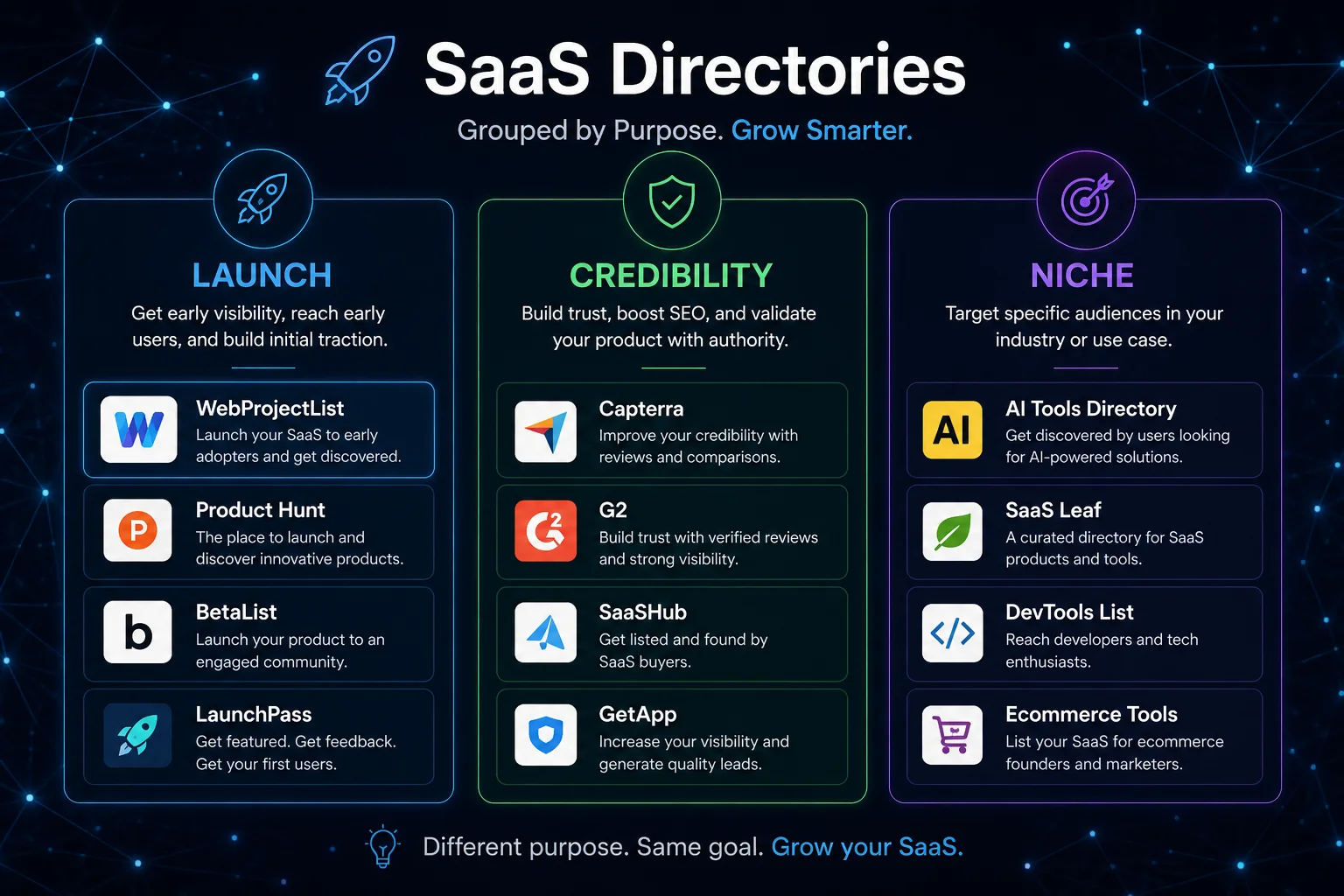
The backlink resources section on WebProjectList has a curated list of directories and other link sources that have already passed this kind of scrutiny. It's a useful starting point if you're building your first submission list and want to skip the vetting step for the most common options.